The Phantasmagoria of Seeming
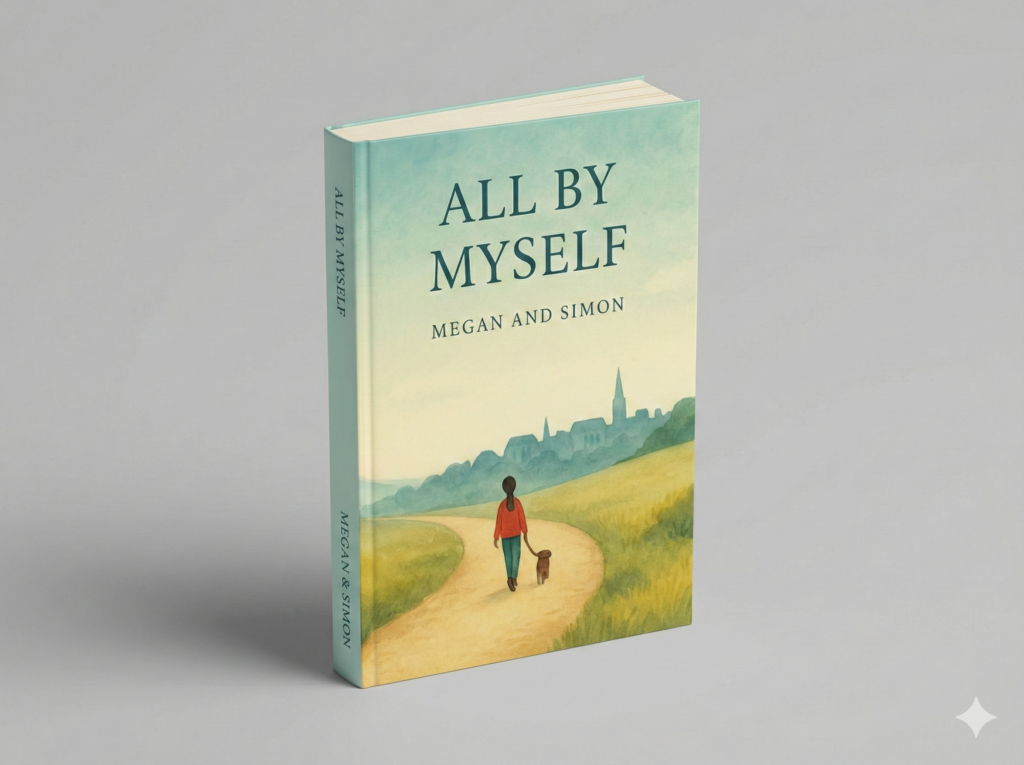
All By Myself
When recognition becomes operation.
A long-form reflection for educators, psychologists, and thoughtful carers on sequence, time, internal language, and the gradual emergence of practical independence.
From a stable world to a usable one
The first stage of learning stabilises the world. Objects become recognisable, words begin to attach, and repeated contact allows things to remain. That is the territory of A Little Bit of Help.
But recognition alone is not enough. A world that can be seen is not yet a world that can be used.
That is where All By Myself begins. It moves beyond the stabilisation of objects into sequence, time, routine, decision-making, and practical independence. In the book itself, this shift is visible in its expanded concern with safety, maths, time, everyday systems, the mind, want and need, shopping, and doing laundry.
Sequence and the first operational structure
Many daily tasks do not become difficult because they are abstract. They become difficult because they require order.
First. Next. Then. After that. Last.
Without sequence, even a simple routine remains a scattering of unrelated actions. With sequence, the routine becomes holdable.
Diagram 1 — Recognition to operation
A stable noun is recognised.
Repeated pairings become familiar.
Actions can be held in order.
Multistep tasks become repeatable.
Action can be initiated and completed.
Laundry is a particularly useful example. In the first phase, laundry is just another household word. In the second, it becomes a complete held structure: sort, load, choose, run, dry, put away. That movement from noun to sequence is one of the central educational achievements of the second book.
Time and orientation
Sequence unfolds within time. Without time, everything remains immediate. Future events press against the present and cannot be properly located.
Once day, date, month, and year begin to stabilise, something changes. Events are no longer merely looming; they become placed.
This is why calendars, birthdays, clocks, days of the week, months, and routine schedules matter so much. In the first book, time enters through the calendar, the watch, and basic temporal structure. In the second, it becomes operational: planning, waiting, anticipating, and using dates to make practical decisions.
Orientation
Day, date, and month are no longer decorative facts. They become tools for locating appointments, birthdays, schedules, and routines.
Reduced anxiety
When future events can be placed in time, they no longer have to be felt all at once in the present.
The emergence of a point of view
Alongside stable perception, something else appears: not only the object, but a position from which the object is encountered.
At first this is unstable. Names exist, but remain somewhat untethered. The sense of being a perceiver is fleeting, undefined, and not yet reliable. There is seeing, but not yet a stable point from which seeing consistently occurs.
This matters because practical independence requires more than recognition. It requires a usable point of reference from which comparisons can be made, preferences held, sequences followed, and actions carried through.
Language, mimicry, and internalisation
Language seems to follow its own developmental ladder.
Diagram 2 — From repeated words to internal language
Sounds are repeated before meaning is secure.
Words attach to perceptual objects and situations.
Short language structures are repeated as chunks.
Patterns are generalised and used silently.
By the time of All By Myself, language is no longer only something spoken aloud. It appears increasingly capable of being used internally: paused over, consulted, and applied to new situations.
Thinking as an emergent function
One of the most interesting shifts in the second stage is that thinking begins to appear not merely as response, but as inner organisation.
This is seen in pauses before acting, in more purposeful questions, in adjusting behaviour to context, and in signs of anticipatory reasoning. It is also reflected by the book’s movement toward planning, explanation, and practical systems: the mind, want and need, Amazon, politics, percentage, and geometry all suggest a learner no longer limited to naming alone.
A stable sense of “someone thinking” appears only after there is enough stable structure to think with.
This does not mean thought is taught directly. Rather, thought seems to emerge when perception, language, sequence, and time have become organised enough to support it.
Executive function and everyday systems
Once sequence, orientation, and internal language are in place, another capacity begins to emerge: the ability to hold a task in mind and carry it through.
This includes planning, checking, correcting, anticipating, and completing. Often it remains partial at first, depending on familiarity and consistency. But even limited forms are significant.
- structured household routines
- time-based tasks and schedules
- shopping and choosing
- calling, messaging, and using familiar apps
- reading selected environmental cues
The second book makes this visible by grounding abstract ideas in practical systems: everyday geography, water, gas, money, percentages, transport, safety, household organisation, animals, and routines of adult life.
Safety, emotion, and social understanding
Safety depends on conceptual clarity. Words such as gas, smell, invisible, dangerous, flammable, and explosive must attach to experience before they become useful.
The same is true of emotion. Once feelings can be named, explained, and distinguished, they become less overwhelming. Explanation begins to reduce distress because the learner no longer experiences every change as undifferentiated uncertainty.
Social development follows the same pattern. A shared world brings with it fairness, consequence, manners, negotiation, boundaries, and the gradual recognition that other people are not merely part of one’s environment, but centres of meaning in their own right.
Limits, patience, and realism
None of this unfolds quickly. Some concepts take years to stabilise, especially those that are distant from familiar experience, weakly anchored in perception, or socially and morally complex.
Progress is not linear. It is emergent. It depends on conditions: relevance, repetition, calm, safety, and enough patience for the world to gradually organise itself.
One should not assume that a learner cannot grasp a concept. Nor should one assume that the concept can be rushed. Foundational learning is often slow, and later growth may be organic, sudden, and surprising.
About the book
All By Myself
- Author
- Dr Simon Robinson
- Series position
- Continuation of A Little Bit of Help
- Educational focus
- Independence, safety, routine, vocabulary, and practical understanding
- ISBN
- 978-1-0684310-4-3
- Publication
- First published in the United Kingdom, 2025
- Printer
- Printed and bound by IngramSpark
- Typography
- Alex Brush, EB Garamond, Playfair Display, Noto Sans Oriya, and Spectral
- Purpose
- To build on the first book by linking language to daily life, safety, practical routines, and growing confidence
In its own afterward, the book describes the approach simply: relevance, repetition, and enjoyment, using real-world examples and vocabulary boxes to strengthen comprehension and expand practical confidence.
Purchase links
Buy All By Myself
Current indexed retailer links for ISBN 978-1-0684310-4-3:
Closing thought
At first, “all by myself” is only a phrase. Later, it becomes something else: a description of completed action.